Tuesday, 23 November 2010

Andrew Goodwin's Theory

Goodwin's six.
He says that "...Music videos are often constructed by the link between the visuals and the song plus the artist. Relationships are built between these in the video, and the close-ups of the artists gives them the representation and publicity they require. Voyeurism is used to increase the video’s attractiveness, particularly to males, whilst intertextuality is often employed in humorous videos."


His six features to a music video are:
-A relationship between the lyrics and the visuals, with the visuals illustrating, amplifying or contradicting the lyrics.
-A relationship between the music and visuals, with the visuals illustrating, amplifying or contradicting the music.
-Genre-related style and iconography present.
-Multiple close ups of the main artist or vocalist.
-Voyeurism often plays a major part, ecspecially in relation to females.
-Intertextual references to other media texts may be present.


In my own work I plan to use these conventions which Goodwin has identified while also inverting them so that my own work isn't seen as a cliché.

Music Video History


The History Of Music Video.


The first form of music video that came on the scene was "The Illustrated song". This was first started by George Thomas when he was hired by Joe Stern and Edward B. to help promote their song "The little lost child". Thomas projected a series of still images on a screen simultaneously to live performances. 


Not long after this the "talkies" were introduced, these were essentially short films with music over the top, which could perhaps be known as the narrative music video today.


Warner Brothers created in the 1930s the nearest thing to today's model of a music video, "The Spooney Melodies". They were about six minutes long and featured art deco style animations combined with film of the performer.


In 1964 "The Animals" with "House Of The Rising Sun" created one of the biggest steps in Music video form, It was a high-quality color clip was filmed in a studio on a specially-built set; with the group lip-synching.


The Beatles.


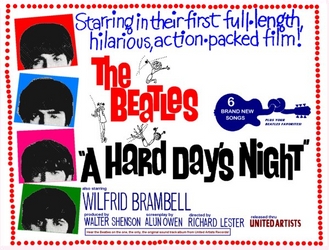
In the same year "The Beatles" starred in a film named after their album "A Hard Days Night". It was directed by Richard Lester. Robert Ebert praises Lester in creating a new format, the music video.


 "...he influenced many other films. Today when we watch TV and see quick cutting, hand-held cameras, interviews conducted on the run with moving targets, quickly intercut snatches of dialogue, music under documentary action and all the other trademarks of the modern style, we are looking at the children of A Hard Day's Night"


In 1965, The Beatles began making promotional clips (then known as "filmed inserts") for distribution and broadcast in other countries—primarily the USA—so they could promote their record releases without having to make in-person appearances.


The Beatles were the band who revolutionised the world of music videos and by the 1970's Britain started airing music videos on the BBC through Top Of The Pops. 


Music Video's Moving To The Present.


In 1981 MTV was released and aired "Video Killed The Radio Star" starting the new age of 24-hour muisc


In 1983 Michel Jackson went the extra mile and filmed his 14 minuet long music video to "Thriller" setting the standard of music videos for it day. Costing a impressive $500,000 to film.
Jackson later topped this by the video he filmed with his sister, Janet Jackson in 1995, Scream, which cost a MASSIVE $7 million to produce!!!


In 1992 MTV started to name the Director of the music video's alongside the artist reflecting the fact that the director is an Artist too.


2005-Present - The internet became Video friendly :)

2005 saw the launch of the website YouTube, which made the viewing of online video faster and easier; MySpace's video functionality, which uses similar technology, launched in 2007. Such websites had a profound effect on the viewing of music videos; some artists began to see success as a result of videos seen mostly or entirely online. The band OKGO may exemplify this trend, having achieved fame through the videos for two of their songs, "A Million Ways" in 2005 and "Here It Goes Again" in 2006.


Wednesday, 10 November 2010

Directors Study - New moduel

Directors Study.

I have chosen to study the work of one the most innovate french directors of our time.
 Michel Gondry.


He started his career by creating music videos for his own band oui oui. His style of work attracted the attention of the artist Bjork who asked him to direct her video for "Human Behavior" after this he went on to direct another six videos for her. From this it launched his career in directing and went on to direct music videos for the likes of :
 Daft Punk, The White Stripes, The Chemical Brothers, The Vines, Steriogram, Radiohead, and Beck.


His innovate imagination has led him to create some of modern cinemas latest techniques such as the "bullet time" technique. This has been used in some of Hollywoods famous action films such as "The Matrix".

His work has also moved into commercials and has directed for major companys such as: Smirnoff Vodka, GAP inc, Levi 501 Jeans.


He also moved in to art insterlations and more recently feature length films.

Eternal Sunshine Of The Spotless Mind (2004)
 
This film was nominated for an Oscar, BAFTA, Austin and an Empire Award of which it won them all.


The Science Of Sleep (2006)


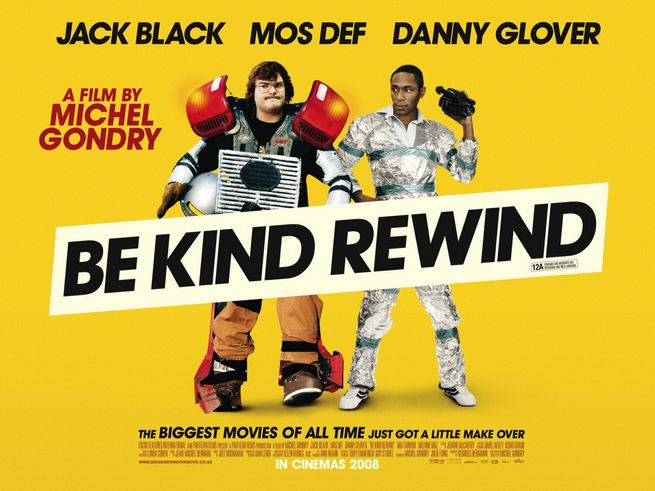
Be Kind Rewind (2008)

Monday, 22 March 2010

Evaluation - Bonus Features

Evaluation.


Cutting Room Floor.
(Without Commentary) 


Lighting Set ups.
(Without Commentary)


Prop Design.
(Without Commentary)


Thursday, 18 March 2010

Old Student Work Review.

Walking Backwards 
The opening to this thriller has an excellent use of camera movement and I particularly like the tracking shots.
The cinematography is really well executed, the red lighting remains constant through out and works really well. The Mise-En-Scene is a very high quality and Is something I would like to incorporate in my film. I am not keen on the dialogue in the film.


Regret? 
Some really creative shots such as the Ariel/Birds eye view, I like these and I would defiantly want to use some creative shots in my film. Several interesting camera angles and a good location. The music is interesting and well timed to the shots.
The car scene at the start is far too long and the narrative lacks depth.


Entrapment
Music timing and sound effects are really well done but the rest of the film is pretty poor. The titles are badly made, narrative lacks depth and all camera techniques are basic. The only thing I like in this film is use of music and sound effects. The flash back sequence is reasonably good.

Wednesday, 10 March 2010

Music and Foley

Music.


This part of the film is the only part I cannot take all the credit for, I doubted my music capability so I made a deal with my old music teacher, she agreed to play and help compose the music in exchange of me playing bass in the school production. A small price to pay for a great sound track. I first of all showed Mrs.Hollocks my inspiration for the sound track which was Stanley Kubrick's: Eyes wide shut.
 The music I wanted to pinch some Ideas from was Musica Ricercata, II (Mesto, Rigido E Cerimoniale).
This is the recurring sound motif in Eyes Wide Shut, I love its simplistic two notes and how easily they send shivers down your spine. I defiantly wanted  something similar, so I briefed Mrs.Hollocks to make me a soundtrack which was mainly grand piano, with a lot of sustain to let the notes ring off to give spine tingle effect. I defiantly wanted it to be minor because it needed to be chilling from the start. I also specifically said that I wanted something to happen musically each time a title came up. In no longer than half an hour Mrs.Hollocks had recorded most of the film's sound track, it was exactly how I wanted it but the only complaint was that it had too many notes in some areas. Seeing it was recorded in garageband using a midi keyboard it did not take long to fix. Once the soundtrack was completed I adjusted the volumes to make it perfect. 


FOLEY.


For sound effects I tried doing some Foley work for a tester. The first one I did was scratching a paper clip on paper to create the sound of a fountain pen writing on paper. When I added it to the clip it lacked something and I got various opinions from people in class and they all agreed it sounded better without the re-recorded sound. 

Sunday, 7 March 2010

The Final Cut!

Here it is! the Final Cut!